Meet the Iranian scientist who won Mustafa Prize for groundbreaking cancer research

By Maryam Qarehgozlou
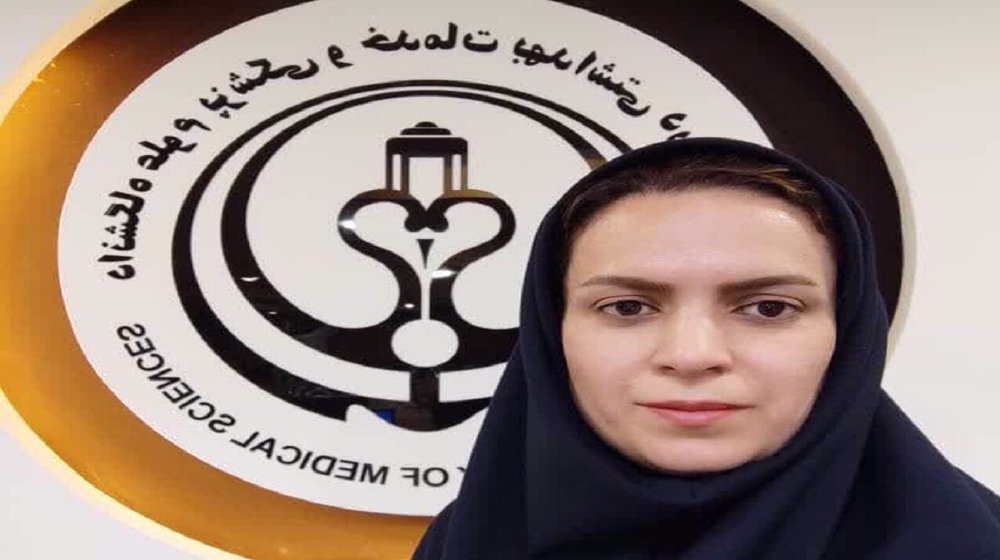
Iranian female scientist, Sepideh Mirzaei-Varzeghani, has been awarded the Mustafa Prize for scientists under the age of 40 in recognition of her groundbreaking research on overcoming drug resistance in cancer treatment through molecular pathways.
Mirzaei-Varzeghani, an Assistant Professor of Cell and Developmental Biology at the Islamic Azad University, Science and Research Branch in Tehran, is among the first recipients of this newly established medal in the biennial science festival.
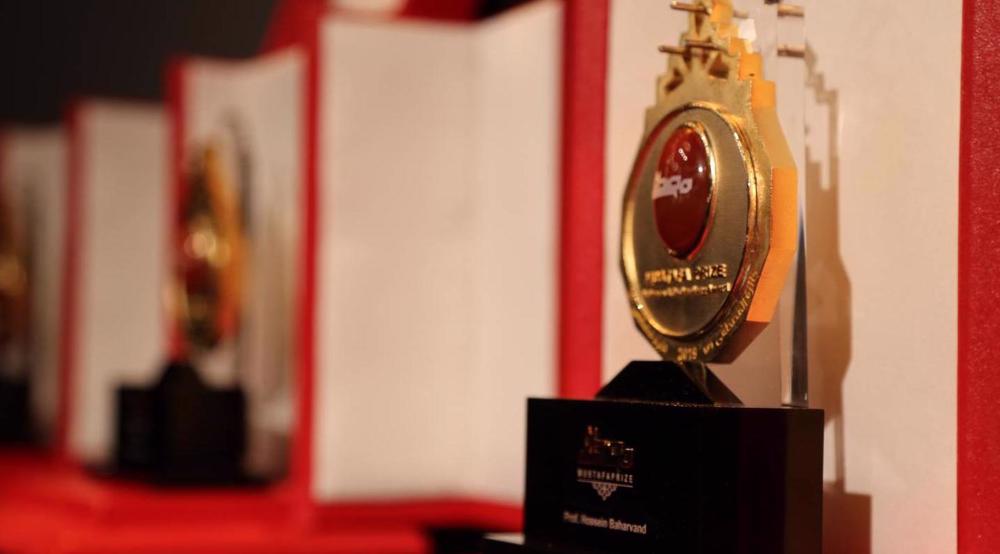
The Mustafa Prize, founded in 2012, is considered one of the most prestigious science and technology awards in the Islamic world.
Since 2015, the awards have been presented biennially to outstanding researchers in three main categories: Life and Medical Science and Technology, Information and Communication Science and Technology, and Basic and Engineering Sciences.
The prize, worth $500,000, is awarded to scientific achievements that improve human life, push the boundaries of knowledge, or introduce new methodologies.
Ali Akbar Salehi, head of the Mustafa Prize scientific committee, explained that the new award category—the Young Scientist Medal—was introduced in 2023, building on the experience of five previous rounds of the Mustafa Prize.
“This medal is awarded biennially to elite young individuals under the age of 40 whose innovative and impactful work contributes to the betterment of human life,” Salehi said.
The medal was established by the Mustafa Science and Technology Foundation, with the support of endowments from two distinguished scientists: Professor Ugur Sahin and Professor Omid Farokhzad, Mustafa Prize laureates. Both donated their awards to launch the initiative.
“Recognizing young scientists and honoring their scientific and technological achievements is not merely a gesture of appreciation—it is an investment that heralds the rise of Islamic civilization,” Salehi noted in his remarks.
According to Salehi, this year’s evaluation process was highly competitive, with 1,002 scientific and technological dossiers submitted to the award secretariat across three main fields: 207 in information and communication science and technology, 81 in biological and medical science and technology, and 714 in basic sciences and engineering.
Each winner of the Young Scientist Medal receives both a certificate of recognition and a cash prize of $10,000.
🇮🇷🏅 Iranian female scientist wins Young Scientist Medal for her work
— Iran First (@IranFirst_PTV) September 7, 2025
Sepideh Mirzaei Varzaghani, an Iranian scientist, won the award at Mustafa Prize for her groundbreaking work on regulating drug resistance in cancer treatment through molecular pathway analysis.#IranFirst🇮🇷 pic.twitter.com/RxIb3zyFcj
Breaking the code of cancer drug resistance
Mirzaei-Varzeghani, an Iranian molecular biologist and award-winning cancer researcher, has dedicated her research work to tackling one of oncology’s greatest challenges: understanding why cancer cells become resistant to treatment.
“Cancer patients often respond to drugs at first,” she noted, “but after several treatment cycles, the tumors adapt. They become resistant, and the same drugs that once worked lose their effect.”
Mirzaei’s research focuses on the signaling pathways inside cancer cells—the complex molecular “switches” that determine how tumors grow, survive, and fight back against drugs.
Her team has discovered that by adjusting and blocking certain pathways, it is possible to “re-sensitize” cancer cells, making them vulnerable to therapy again.
At the heart of her work is NF-κB, a powerful nuclear factor that controls more than 400 essential genes in the body. When balanced, NF-κB is crucial for immunity, inflammation, and cell survival.
But when it becomes overactive, it can fuel cancer growth, spread tumors (metastasis), and trigger drug resistance.
Her innovation lies in linking this pathway to non-coding RNAs—tiny genetic regulators once thought to be “junk.”
She showed that these RNAs, especially microRNAs (miRNAs), act like master switches: some can shut down NF-κB and make cancer cells more sensitive to chemotherapy or radiotherapy, while others activate it and strengthen resistance.
Mirzaei extended her research to other non-coding RNAs, including long non-coding RNAs (lncRNAs) and circular RNAs (circRNAs), which interact with miRNAs in a complex molecular network.
Together, these RNAs can rewrite how NF-κB behaves, influencing whether tumors shrink or spread.
“Overactive NF-κB is like pulling a trigger for cancer pathways—from blood vessel growth to metastasis,” Mirzaei stated. “If we can silence that trigger with the help of non-coding RNAs, we can stop the cancer from advancing.”
Her findings suggest that many existing anti-cancer drugs can be made more effective when combined with RNA-based therapies. By boosting miRNAs that suppress NF-κB, for example, it may be possible to overcome drug resistance and improve patient survival.
Mirzaei envisions personalized cancer treatments that restore balance to NF-κB—therapies tailored to each patient’s molecular profile.
“This is not just about stopping tumor growth,” she added. “It’s about breaking drug resistance and opening a path to smarter, more precise cancer therapies.”
🇮🇷 Wahab Mirrokni, an Iranian mathematician and computer scientist, has influenced innovation at Microsoft & Google.
— Iran First (@IranFirst_PTV) September 7, 2025
He won 2025 Mustafa Prize for developing proximity-sensitive hashing—a breakthrough in data processing that detects subtle changes in digital inputs#IranFirst🇮🇷 pic.twitter.com/K27hA6hHze
Other Mustafa Prize laureates
Alongside Mirzaei-Varzeghani, two other young researchers were recognized with the Young Scientist Medal at a ceremony in Tehran this week.
Professor Pau-Loke Show, a Full Professor in the Department of Chemical and Petroleum Engineering at Khalifa University in Abu Dhabi, and Dr. Buse Cevatemre Yıldırım, a lecturer at the School of Medicine at Koç University in Istanbul, were also honored for their contributions.
The 6th edition of the Mustafa Prize is taking place from September 6 to 10, coinciding with Islamic Unity Week, which is observed annually between the dates Sunnis and Shia Muslims respectively commemorate the birth of Prophet Muhammad (PBUH).
Three distinguished scientists were named as this year’s laureates.
Mehmet Toner, born in 1958 in Istanbul, received the award in Life and Medical Science and Technology for pioneering microfluidic technology that allows for the rapid isolation of tumor cells, enabling faster and more accurate disease diagnosis.
In the field of Information and Communication Technology, Vahab Mirrokni, born in 1979 in Iran, was recognized for his groundbreaking work on artificial intelligence algorithms.
Mohammad Nazeeruddin, born in 1957 in India, was honored for his pivotal contributions to clean energy research, particularly his work on solar cell technology, including both dye-sensitized and perovskite cells.
Speaking about the broader impact of the award, Salehi emphasized that the Mustafa Prize provides a vital platform for knowledge exchange among scientists across the Islamic world. It has enabled researchers to collaborate more closely and build stronger scientific networks, he said.
“The laureates of this prize are selected carefully and without bias. This feature has led to the prize’s recognition in international forums,” he added.
Salehi also revealed that there are ongoing discussions with other countries to hold future prize ceremonies in the capitals of Islamic nations, further expanding the reach and influence of the award.
Scientific excellence amid war: Iran’s Olympiad students win maths championship, five physics medals

Iran to unveil first homegrown container reach stacker by year-end for deployment at ports

Iranian scientists develop first-of-its-kind device to prevent costly oil pipeline-clogging deposits


US aggressive acts against Iran constitute war crimes: Iran envoy to UN
Iraq's Islamic Resistance offers $10 million bounty for Trump's assassination
VIDEO | US lawmakers back anti-Iran policy because it serves their donors: Analyst
Iran Army hits US helicopter, reconnaissance aircraft base in Bahrain
US launches fresh wave of deadly strikes on Iran, targets bridges, railway, airports
Iran urges Persian Gulf states to join hands for Hormuz security, blames US for instability
'Go to Hell': JD Vance lashes out at Israeli campaign to derail US-Iran talks
Iran slams US, Israel, Argentina for voting against key UN counterterrorism resolutions


 PressTV NEWSLETTER
now
PressTV NEWSLETTER
now
 This makes it easy to access the Press TV website
