How Dr. Feqhi, martyred in Israeli aggression, pioneered cancer radiation technology in Iran
By Humaira Ahad
On the night of June 13, 2025, a missile launched by the Israeli regime tore through a residential neighborhood in Tehran, killing one of Iran’s brightest scientific minds.
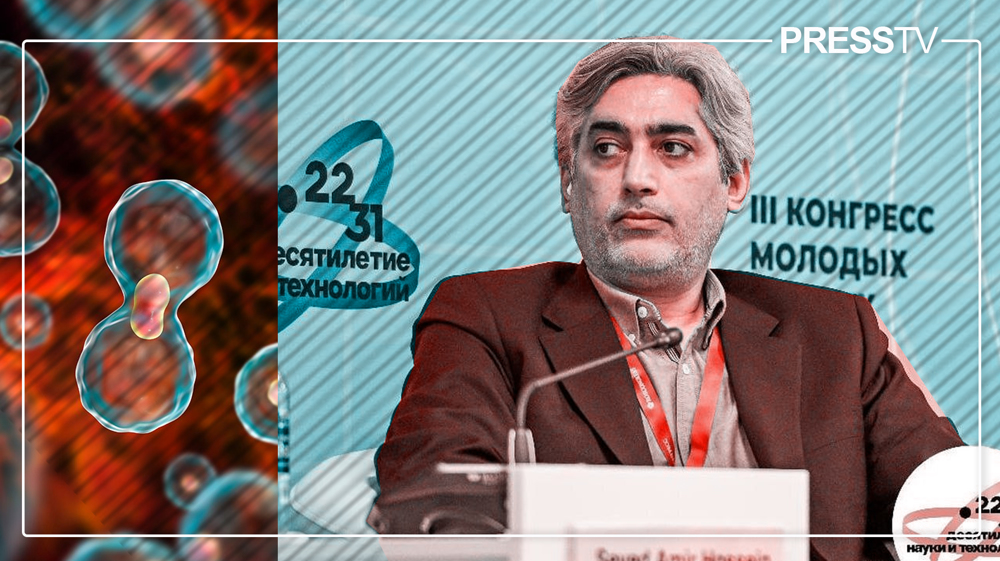
Dr. Seyed Amir Hossein Feqhi was a pioneering nuclear engineer and a leading expert in radiopharmaceuticals. The large-scale terrorist attack, part of Israel’s 12-day war on Iran, also claimed the lives of fellow nuclear scientists and several senior military commanders.
At his funeral ceremony, Dr. Feqhi’s bereaved mother expressed both grief and resolve.
“I thank God that my son fulfilled his ultimate dream on such a sacred path…His absence is a heavy grief for us, but deep in my heart, I believe he attained the happiness and fate I always prayed for through martyrdom,” she said.
Dr. Feqhi, widely recognized for his contributions to peaceful nuclear technologies and radiation-based medical advancements, began his academic journey from Urmia University in Western Azerbaijan province, where he earned his bachelor’s degree in physics, specializing in nuclear physics, in 2000.
He later pursued advanced studies at Tehran’s Amirkabir University of Technology, obtaining a master’s degree in nuclear engineering (energy branch) in 2003, followed by a Ph.D. in the same field in October 2008.
Dr. Feqhi was a professor of nuclear engineering and a member of the editorial board of scientific journals at Shahid Beheshti University in Tehran.
He also served as a special assistant and advisor to the president of the Atomic Energy Organisation of Iran (AEOI). His work encompassed research, education, and management within Iran’s nuclear industry.
A large banner honoring IRGC commanders and nuclear scientists martyred during the 12-day Israeli aggression was installed in Tehran’s Enghelab Square.
— Press TV 🔻 (@PressTV) June 28, 2025
Follow: https://t.co/mLGcUTS2ei pic.twitter.com/y7txU0HN70
“Let the US and the Zionist regime know that this land will never deviate from its path with the martyrdom of sons like him. Each martyr is a beginning for the flourishing of even more faithful and capable scientists,” his mother said at the funeral.
“The enemy may take away the pure bodies of our loved ones, but their intellect and sincerity will take root in the soil of Iran and remain.”
Her poignant and powerful words echoed the enduring ideals of resistance and martyrdom that define Iran’s scientific and national sovereignty.
A legacy of peaceful power
Dr. Feqhi was a towering figure in Iran’s nuclear science and technology landscape. He was known for his pioneering contributions across multiple fields, including radiopharmaceuticals, radiation technology, industrial instrumentation, and international standardization.
His work, spanning across academic research, applied technology, and industrial innovation, exemplified the strategic vision of Iran’s nuclear program as a driver of national development, health, and technological independence.
The broader narrative around nuclear technology often centres on notions of threat and weaponization. However, Dr. Feqhi’s career highlighted the peaceful and strategic applications of nuclear science that are essential to Iran’s national interests.
These include the production of radiopharmaceuticals critical for cancer treatment and hard-to-treat diseases, sterilization of medical devices, food safety improvements, and the generation of clean electricity, all crucial for the country’s sustainable development.
This comprehensive vision closely aligns with the strategic outlook of the Leader of the Islamic Revolution, Ayatollah Sayyed Ali Khamenei, on the role of Iran’s nuclear program.
Beyond geopolitical confrontations, the focus remains on building a resilient scientific infrastructure, maintaining technological independence, and securing the country’s future progress.
Dr. Feqhi’s life and work embodied this vision. His efforts in developing precise nuclear instrumentation, establishing international standards, and training new generations of specialists reflected a profound grasp of the role scientific power plays in national sovereignty.
The IAEA has the blood of Iranian nuclear scientists on its hands, says @RealScottRitter.
— Press TV 🔻 (@PressTV) June 29, 2025
Follow: https://t.co/mLGcUTS2ei pic.twitter.com/JTsWnQkKZs
Innovations in radiation technology
Dr. Feqhi’s contributions to the industrial and technological advancement of radiation sciences in Iran were broad and transformative.
He was a central figure in the country’s radiation application sector, serving as the founder and head of the industrial section of the National Radiation Application Centre. His vision extended to expanding the peaceful use of radiation technologies across industries, especially within the private sector.
One of his major achievements was pioneering private-sector gamma irradiation facilities in Iran. These centres provide sterilization services for medical products, food, and agricultural goods, contributing significantly to the country’s health infrastructure and food security.
Under his guidance, Iran advanced in medical sterilization by radiation, reducing dependency on imports and raising hygiene standards nationwide.
Dr. Feqhi also developed radiation-based diagnostic techniques. Using gamma rays, his methods allowed for nondestructive testing and defect detection in polymers, gemstones, and semiconductors.
His work supported sensitive industrial environments, including petrochemical plants and power stations, by enhancing safety and quality control.
In nuclear instrumentation, he designed and produced critical tools for flow measurement and density gauging tailored for oil refineries and petrochemical industries. These instruments enabled real-time process control and improved operational efficiency.
By fostering domestic production of these advanced devices, Dr. Feqhi reduced reliance on costly foreign equipment, strengthening Iran’s technological autonomy.
A significant part of his career was devoted to ensuring Iran’s radiation technologies met international quality and safety standards. Under his leadership, Iranian radiation companies achieved global certifications, elevating the country’s radiation technology industry’s credibility and opening opportunities for participation in global markets.
✍️ Profiles: Prominent Iranian nuclear scientists assassinated in latest Israeli aggression
— Press TV 🔻 (@PressTV) June 14, 2025
By Maryam Qarehgozlouhttps://t.co/cvTdSFDAkD
His work also extended to sustainable agriculture and public health, including projects focused on pest control through the Sterile Insect Technique (SIT) and food irradiation programs designed to enhance safety and shelf life.
Dr. Feqhi’s expertise reached into space research and electronics as well. He studied the effects of space radiation on electronic components, designed protective systems for satellites, compared shielding materials such as aluminium and polyethylene, and investigated solar radiation impacts on semiconductors.
His work included contributions to particle accelerators and reactors. He also developed a neutron radiography system for the Arak reactor and created software to calculate fuel consumption in power reactors.
Contribution to radio pharmacy
Before the Islamic Revolution, Iran lacked specialized personnel in nuclear medicine.
However, since 1981, despite challenges including imposed war and crippling sanctions, the field has continued to develop, supported by the AEOI and domestic production of radiopharmaceuticals.
Building on the pioneering work of scientists like the late Dr. Feqhi, who significantly advanced Iran’s radiopharmaceutical production and nuclear medicine technologies, Iran has emerged as a regional powerhouse in this specialized medical field.
Dr. Feqhi’s achievements in radiopharmaceuticals and nuclear medicine stand out among his scientific contributions. He developed radioactive materials specifically for cancer diagnosis and treatment, skilfully integrating nuclear physics with artificial intelligence in the production process.
In an interview given three years ago, the late Dr. Feqhi announced a significant milestone.
“Iran has entered the production phase of therapeutic radiopharmaceuticals,” he said in an interview at the time.
“The goal of working in the field of radiopharmaceuticals is to meet the real needs of people in cancer treatment. We are now addressing an issue that, God forbid, any one of us may face. It is truly unfortunate to depend on other countries for this. Therefore, the young people of this country have devoted all their zeal to reducing the problems faced by cancer patients and alleviating their suffering.”
Iran as regional leader in nuclear medicine
Iran has emerged as a key player in nuclear medicine production, specialist training, and therapeutic infrastructure development throughout the region.
Presently, more than 200 active nuclear medicine centres operate across the country, providing daily diagnostic and therapeutic services to thousands of patients.
This extensive network places Iran at the forefront in West Asia in terms of both the number of active centres and trained specialists.
The funeral in capital Tehran for 60 nuclear scientists, military commanders and civilians martyred in Israeli strikes began at 8:00 am in Enqelab Square on Saturday, proceeding to Azadi Square, about 11 kilometers across the sprawling metropolis.
— Press TV 🔻 (@PressTV) June 28, 2025
Follow https://t.co/B3zXG73Jym pic.twitter.com/gXrDyKHQK4
“Relying heavily on domestic expertise and the dedicated efforts of specialists within the AEOI, the country has achieved a transformative breakthrough in producing diagnostic kits and therapeutic radiopharmaceuticals,” Dr. Mohsen Saghari, professor at Tehran University of Medical Sciences and former president of the Iranian Society of Nuclear Medicine, said in a recent interview.
“Nearly 30 types of diagnostic kits have been developed locally and are now widely used in medical centres, significantly improving the accuracy and precision of medical testing.”
Dr. Saghari emphasized the profound impact of domestically produced radiopharmaceuticals on cancer treatment, explaining that while comparable therapies in the US and Europe can cost thousands of dollars, Iran provides these advanced treatments at a fraction of the cost.
“This major achievement has been made possible through the capabilities of the AEOI and the domestic production of radiopharmaceuticals,” he said.
Currently, the AEOI’s radiopharmaceutical division is working on new drugs undergoing clinical trials, which are expected to be introduced in nuclear medicine centres nationwide.
One of the most promising upcoming technologies is alpha therapy, which uses radionuclides such as Radium-223 and Actinium-225.
“This cutting-edge treatment is regarded as one of the most advanced cancer therapies worldwide and could revolutionize cancer care in Iran,” Dr. Saghari noted.
Despite ongoing brutal Western sanctions, Iran successfully provides over 90 percent of the diagnostic and therapeutic nuclear medicine services available in leading global centres. This achievement has propelled the Islamic Republic beyond regional leadership to a prominent international position.
Regarding the types of radiopharmaceuticals produced, Dr. Saghari added that Iran is now a significant player in the production and export of strategic radiopharmaceuticals.
These developments highlight the crucial role nuclear medicine plays in Iran’s public health, with over one million patients receiving diagnostic and therapeutic care annually.
“If Iran’s peaceful nuclear activities were halted, millions of Iranians would be deprived of essential healthcare services. Protecting and strengthening nuclear medicine capacities is not just a scientific necessity but a national priority,” the nuclear medicine professor asserted.
As the Islamic Republic of Iran advances its peaceful nuclear program, Dr. Feqhi’s legacy remains a powerful symbol of scientific resilience in the face of external aggression.
US ‘falsely portrayed’ Iran’s enriched uranium as danger to invade country: Envoy
Iran’s election as NPT vice president delivers major diplomatic slap to US
Promises, pressure, pullout: Why US nuclear talks with Iran were never about a deal


Majority of US bases in West Asia damaged in retaliatory strikes by Iran, allies: Probe
Iran welcomes nomination of Iraq's new PM-designate; reaffirms support for Iraqi stability
IRGC Navy vows to enforce Leader's 'historic' directive in Persian Gulf
May 1: Iran's resilience pays off with major strategic gains as US pressure tactics fail
Germany blasts Trump’s anti-Iran strategy, urges quick end to aggression
Minab children massacre not ‘unfortunate situation’ but ‘heinous war crime’: Tehran
VIDEO | The hostage president: Who really runs the world?
Iran open to diplomacy if US drops its excessive demands: FM




 PressTV NEWSLETTER
now
PressTV NEWSLETTER
now

 This makes it easy to access the Press TV website
