Iran’s rise and resilience through BRICS

The recent BRICS summit in Rio de Janeiro marked a defining moment for Iran, as it solidifies its position within a dynamic coalition of emerging economies during a period of heightened regional tensions.
This development comes as Iran faces intensified pressures, particularly from Israeli and US aggression.
While these challenges might be seen as obstacles, Iran’s expanding role within BRICS offers a clear path toward economic realignment and strengthened sovereignty.
Iran’s formal induction into BRICS in 2024 is far more than a symbolic geopolitical achievement. It signals Tehran’s active engagement in reshaping the global economic order—one that increasingly challenges Western dominance.
Founded by Brazil, Russia, India, China, and South Africa, BRICS represents nearly 30% of the world’s population and approximately 25% of global GDP, making it a powerful bloc with rising economic and political influence.
For Iran, membership in BRICS provides a critical counterbalance to decades of sanctions imposed by Western powers. These sanctions have limited Iran’s access to trade, investment, and international financial networks.
Through BRICS, Iran gains entry to diversified markets and alternative financial channels that significantly reduce reliance on the US dollar—an essential goal given the weaponization of the dollar in sanction regimes.
BRICS’s recent focus on developing localized payment systems and promoting trade settlements in national currencies directly benefits Iran. This framework facilitates smoother and more resilient trade flows with key partners such as China, India, and Russia, reinforcing economic sovereignty and stability.
One of Iran’s greatest strengths lies in its geographic location at the crossroads of West Asia, Central Asia, and South Asia. This strategic position makes Iran a natural transit corridor, connecting the Persian Gulf, the Caspian Sea, and key overland routes that link Europe and Asia.
Iran’s substantial investments in infrastructure—including the expansion of the Chabahar port and the development of the Khaf-Herat railway connecting Iran to Afghanistan and Central Asia—align closely with BRICS’ agenda to boost regional connectivity.
These infrastructure projects enhance Iran’s capacity as a vital trade gateway, integrating it into emerging Eurasian supply chains that offer alternatives to traditional Western-dominated routes.
Improved transport networks reduce logistical costs and delivery times, increasing Iran’s competitiveness and supporting the growth of non-oil exports. Such developments are crucial for Iran’s economic diversification efforts as it seeks to reduce its historic dependence on oil revenues.
BRICS membership also opens new economic horizons beyond the energy sector. The bloc’s collective market, characterized by growing middle classes and expanding demand, offers vast opportunities for Iranian exporters.
Sectors such as agriculture, manufactured goods, construction services, and engineering stand to benefit from enhanced trade and investment ties.
Furthermore, Iranian companies can expect increased foreign direct investment from BRICS countries. Areas like renewable energy, telecommunications, and industrial modernization align with both BRICS priorities and Iran’s long-term economic vision.
Cooperation within the bloc also promotes technology transfers and knowledge sharing, accelerating Iran’s innovation capacity—essential for boosting productivity and global competitiveness.
Amid escalating Israeli and US military actions, which threaten regional stability and economic certainty, Iran’s strengthened relations with BRICS members provide vital diplomatic and political support.
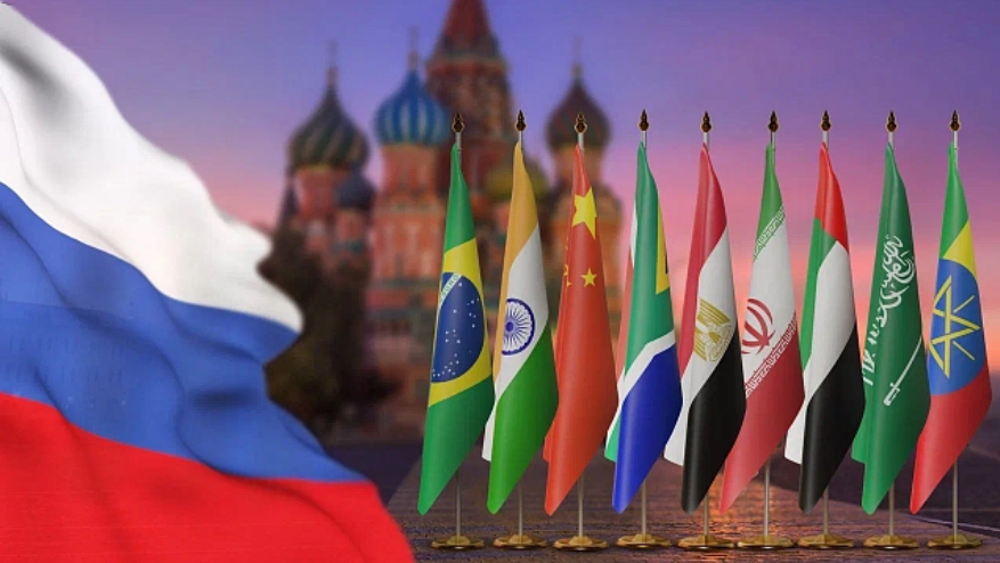
BRICS countries have collectively condemned unilateral military aggression that violates international law, signaling their solidarity with Iran on the global stage. This collective backing bolsters Iran’s position in multilateral negotiations and diplomatic forums.
The geopolitical unity of BRICS also reinforces economic resilience by encouraging continued trade and investment despite external pressures. Iran’s engagement with the bloc thus acts as a protective shield, enabling steady development and growth even amid regional volatility.
While external partnerships are indispensable, Iran’s economic future also depends on domestic reforms. To fully capitalize on BRICS membership, Tehran must implement structural changes to improve the business environment, enhance transparency, and streamline regulatory procedures.
Strengthening institutional frameworks and fostering an innovation-driven, competitive economy will attract greater foreign investment and facilitate technology adoption.
Such reforms will complement ongoing infrastructure expansions and trade liberalization efforts, amplifying the benefits of BRICS membership.
The government’s focus on economic diversification and technological advancement is supported by Iran’s rich human capital—a youthful, educated workforce poised to drive innovation and productivity.
As BRICS continues to expand and deepen cooperation, Iran stands ready to be a key player shaping this new global order. The bloc’s initiatives on alternative financial systems, trade facilitation, and joint investment projects align closely with Iran’s strategic objectives.
This emerging multipolarity also enhances Iran’s influence in global economic governance, empowering it to advocate for fairer trade rules and greater respect for sovereignty and national development.
BRICS’s unified stance against unilateral coercion and aggression offers Iran a powerful platform to assert its rights and interests internationally.
In conclusion, Iran’s path forward requires ongoing reform and active diplomatic engagement. Yet, the country’s foundational strengths and strategic alliances within BRICS herald a future marked by resilience, growth, and increased global relevance.
Iran today is not merely enduring external challenges—it is transforming them into opportunities to build a stronger, more independent, and prosperous nation within the evolving multipolar world order.
Iran joins six nations capable of designing, manufacturing advanced cryogenic equipment
Iran, Russia push ahead with $25 billion nuclear plant, trade corridor
Oil prices hike as Israelis attack deeper into Lebanon



Hormuz to Bab el-Mandeb: Qaani announces new resistance belt to choke Israeli aggression
Africa’s best referee denied entry to US despite being picked by FIFA for World Cup
Lebanon condemns repeated Israeli attacks on historic landmarks
Iran to pursue both war and diplomacy to defend people’s rights: Qalibaf
Senior Yemeni official: Ansarullah won't allow Netanyahu to bully West Asia
Iran upended equation of ceasefire on paper, violations in practice: Qalibaf
Iran attaches no value to EU’s ‘fraudulent’ sanctions: Gharibabadi
Hamas hails Iranian response to Israeli aggression on Lebanon


 PressTV NEWSLETTER now
  This makes it easy to access the Press TV website