No room for ambiguity: Indonesia must uphold its commitment to Palestinian cause
By Dina Y. Sulaeman
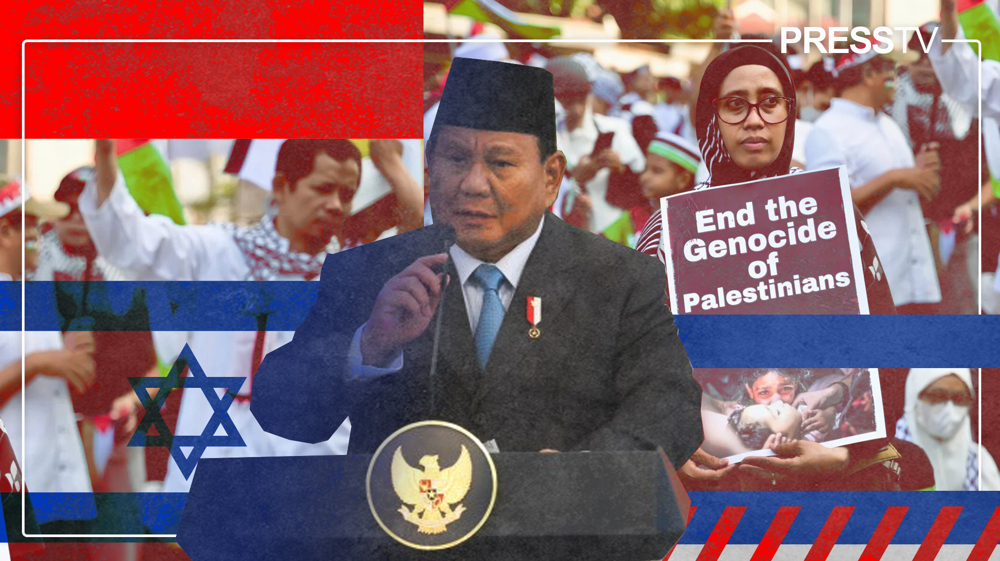
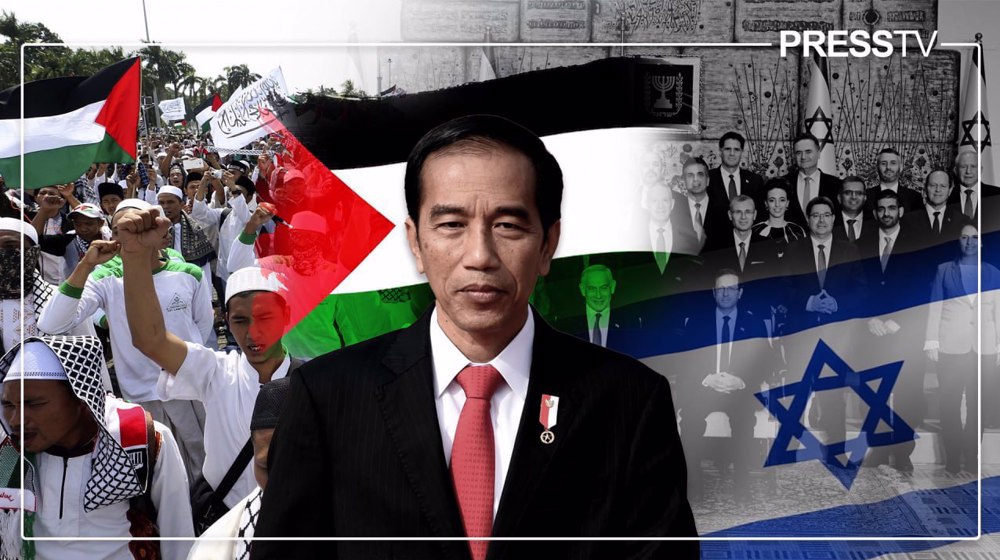
President Prabowo Subianto’s recent statement during his meeting with President Emmanuel Macron has sparked public controversy, especially when contrasted with his earlier remarks at the Indonesia–China Business Reception 2025 forum.
At that forum, Prabowo unequivocally condemned the ongoing genocide, colonialism, imperialism, oppression, and apartheid endured by the Palestinian people – language that reflects Indonesia’s longstanding support for the Palestinian cause and its anti-colonial stance, a core principle of the country’s foreign policy.
However, during his meeting with the visiting French president, President Prabowo said, “We must also recognize and guarantee Israel’s right to stand as a sovereign state and a state whose security must also be respected and guaranteed.”
This phrasing echoed narratives commonly advanced by the Israeli regime and its allies, such as the “right to exist” and the “right of self-defense” – concepts frequently invoked to justify Israeli genocidal war against Palestinians in the Gaza Strip, under the guise of self-defense.
Right to life in international law
Normatively, under international law, as emphasized by Francesca Albanese, UN Special Rapporteur on the occupied Palestinian territories, there is no such concept as “a state’s right to life.”
What is universally recognized and guaranteed is the human right to life. Once an entity is established and becomes a member of the United Nations, its legal existence is affirmed.
Therefore, the Israeli regime’s use of the “right to life” narrative to justify its military aggression – particularly against civilians in Gaza – is legally unfounded and irrelevant.
Similarly, the “right to self-defense,” as outlined in Article 51 of the UN Charter, can only be invoked in response to an armed attack by another state. In the context of Palestine, this condition is not met, as the Israeli occupation has never recognized Palestine as a sovereign state.
✍️Viewpoint - Indonesia won't normalize with Israel because Indonesians won’t allow that
— Press TV 🔻 (@PressTV) April 13, 2024
By Dina Y. Sulaemanhttps://t.co/0BKmKnCtaO
Operation Al-Aqsa Flood on October 7, 2023, was launched by Hamas and other resistance groups in Gaza against the Zionist entity that has occupied their land and terrorized them.
In this regard, UN General Assembly Resolution 37/43 (1982) explicitly affirms that a colonized people have the right to resist occupation, including through armed struggle.
Conditional diplomacy: A propaganda gap
At his news conference with Macron, President Prabowo declared that Indonesia is prepared to establish diplomatic relations with Israel, provided that Israel first recognizes the state of Palestine. This diplomatic conditionality, while strategic on the surface, reveals several fundamental flaws upon closer scrutiny.
First, Prabowo’s reference to the two-state solution reflects a longstanding framework endorsed by the UN and many international actors. However, prominent scholars such as Professor John J. Mearsheimer, who was notably invited by Prabowo himself for a discussion with his ministers, argue that the two-state solution is no longer realistic.
It is, as Mearsheimer puts it, “a train that has passed the station.” In reality, Israel’s policies increasingly signal a shift towards the “Greater Israel” project, evidenced by the blockade of Gaza, the expansion of illegal settlements in the occupied West Bank, and systematic plans to displace Gaza’s indigenous population.
Consequently, conditioning Indonesia’s normalization of relations on Israel’s recognition of Palestinian independence risks placing Indonesia in a prolonged waiting position for a concession that is unlikely ever to materialize.
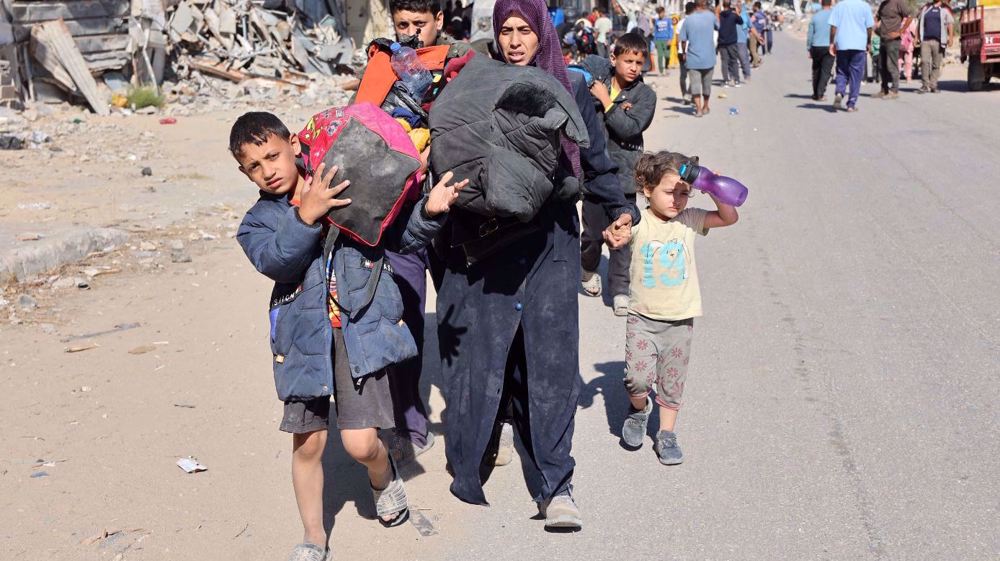
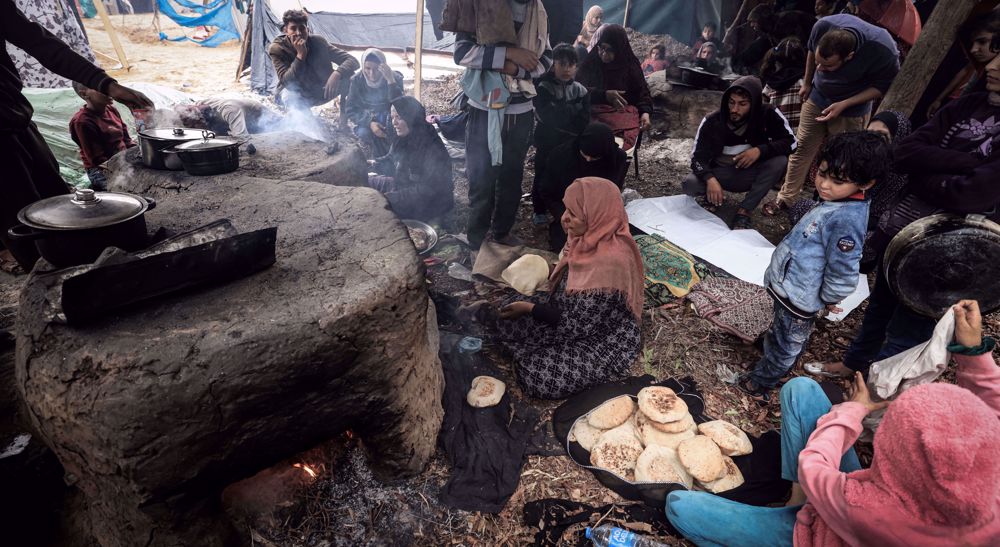
Moreover, mere recognition is not enough. True justice requires accountability through international legal mechanisms, such as proceedings at the International Court of Justice (ICJ) and the International Criminal Court (ICC), to address and hold Israel responsible for the ongoing genocide in Gaza, which has already claimed nearly 54,000 lives in 600 days.
✍️ Viewpoint - Indonesia's Gaza intervention: A humanitarian gesture or a strategic trap?
— Press TV 🔻 (@PressTV) April 10, 2025
By @dina_sulaeman https://t.co/1zMbvYuQXK
Second, in the context of global political communication, international media often overlook the nuanced conditions that President Prabowo mentioned, instead seizing on the headline: “Indonesia is ready to establish diplomatic relations with Israel.”
Such a simplified narrative is highly susceptible to being exploited by the Israeli propaganda apparatus and its allies to create the impression that Indonesia is softening its long-standing support for the Palestinian cause or possibly changing track.
Indonesia's consistency needs to be maintained
It must be emphasized that Indonesia – and President Prabowo himself – have consistently voiced strong support for Palestinian independence, as reflected in speeches that explicitly condemn genocide, imperialism and apartheid.
However, in today’s complex diplomatic environment, imprecise language can create vulnerabilities that hostile parties may readily exploit.
Therefore, this consistency must be carefully maintained and safeguarded in diplomatic discourse. Indonesia’s commitment to Palestine should never be compromised by ambiguous or conditional statements that risk generating a false perception of a shift in its foreign policy.
Indonesia must remain steadfast, rejecting any form of normalization with Israel until the full rights of the Palestinian people are unequivocally recognized and upheld, not merely promised.
This principled stance aligns with Indonesia’s constitution and its longstanding legacy of anti-colonial struggle.
Dina Y. Sulaeman is an Assistant Professor at the International Relations Department Universitas Padjadjaran, Indonesia
(The views expressed in this article do not necessarily reflect those of Press TV)

Hunger strike for Sumud detainees held in Libya
Israeli forces storm West Bank towns, abduct ordinary Palestinians
Hezbollah fighters successfully ambush Israeli forces in southern Lebanon



VIDEO | Karachi marks passing anniversary of Imam Khomeini with tribute to resistance legacy
Israeli attack on Beirut shows US lacks will or ability to meet commitments: Qalibaf
Iran to replace all air defense equipment damaged in US-Israeli aggression: Commander
Dozens of terrorists, spies and saboteurs arrested during US-Israeli aggression on Iran
Israel bombs southern Beirut again; Iran warns against ‘miscalculations’
VIDEO | Colombia has one week left to decide its future in presidential runoff
Araghchi: Recent war proved regional security can’t be built without Iran
How Iran outranks Germany, Canada, Japan in drinking water quality



 PressTV NEWSLETTER
now
PressTV NEWSLETTER
now
 This makes it easy to access the Press TV website
