Editing embryo genes now allowed in UK

British scientists have been given the go-ahead to edit he genes of human embryos for research.
Kathy Niakan, a stem cell scientist from London's Francis Crick Institute, was granted a licence to carry out similar experiments.
"The Human Fertilisation and Embryology Authority (HFEA) has approved a research application from the Francis Crick Institute to use new 'gene editing' techniques on human embryos," Niakan's lab said on Monday.
It said the work carried out "will be for research purposes and will look at the first seven days of a fertilised egg's development, from a single cell to around 250 cells".
The basic research could help scientists understand why some women lose their babies before term and provide better clinical treatments for infertility, using conventional medical methods.
The authorization has already been described by the media which say it could lead to the creation of Britain’s first genetically modified human embryos.
This came less than a year after Chinese scientists caused an international furor by saying they had genetically modified human embryos.
CRISPR can enable scientists to find and modify or replace genetic defects, and many of them have described it as "game-changing".
Niakan says she has no intention of genetically altering embryos for use in human reproduction, but wants to deepen scientific understanding of how a healthy human embryo develops, something that could, in the long term, help to improve infertility treatments.
At a briefing for reporters in London last month, she said the first gene she planned to target was one called Oct4, which she believes may have a crucial role in the earliest stages of human fetal development.

Far-right, anti-Islam protest sparks counter-protests in Manchester

British Museum faces backlash for eliminating references to ‘Palestine' from displays
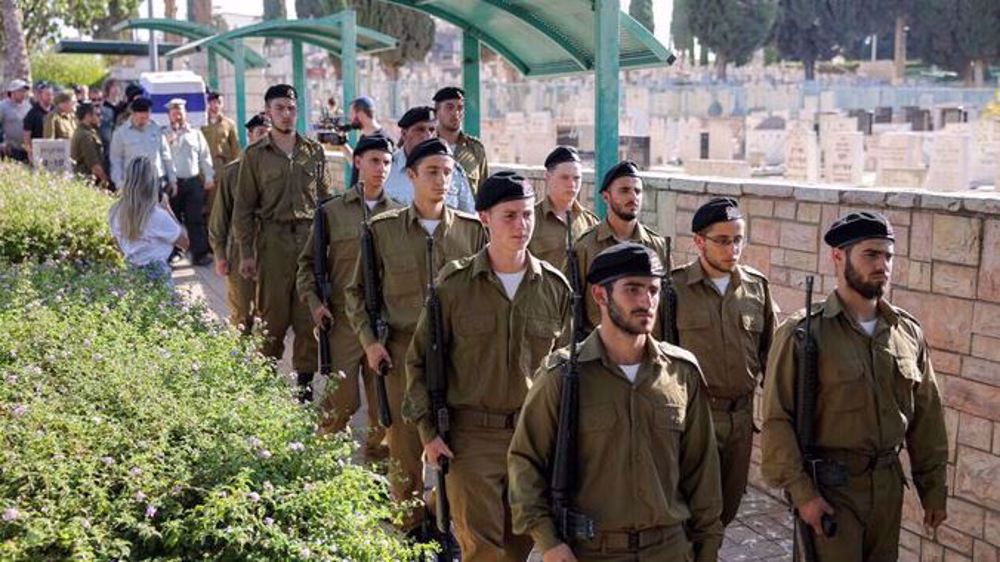
Over 2,000 Britons served in Israeli military during Gaza genocide: Report



April 23: Iran's united leadership rebuffs US provocations as truce violations persist
Araghchi: Israeli terror assassinations collapse against Iran’s unity and resistance
Senior commanders: Tehran secure, borders stronger than before
Collective slap: Heads of Iran’s three state branches strike back at Trump
US-Israeli war damaged 150 Iranian historical, cultural sites: Ministry
Iran says nuclear bomb narrative a fabrication, ready for any scenario
VIDEO | 'The US and Israel are using talks as a cover'
VIDEO | 'Iran should go after nuclear bomb to put US in its place'


 PressTV NEWSLETTER
now
PressTV NEWSLETTER
now

 This makes it easy to access the Press TV website
